
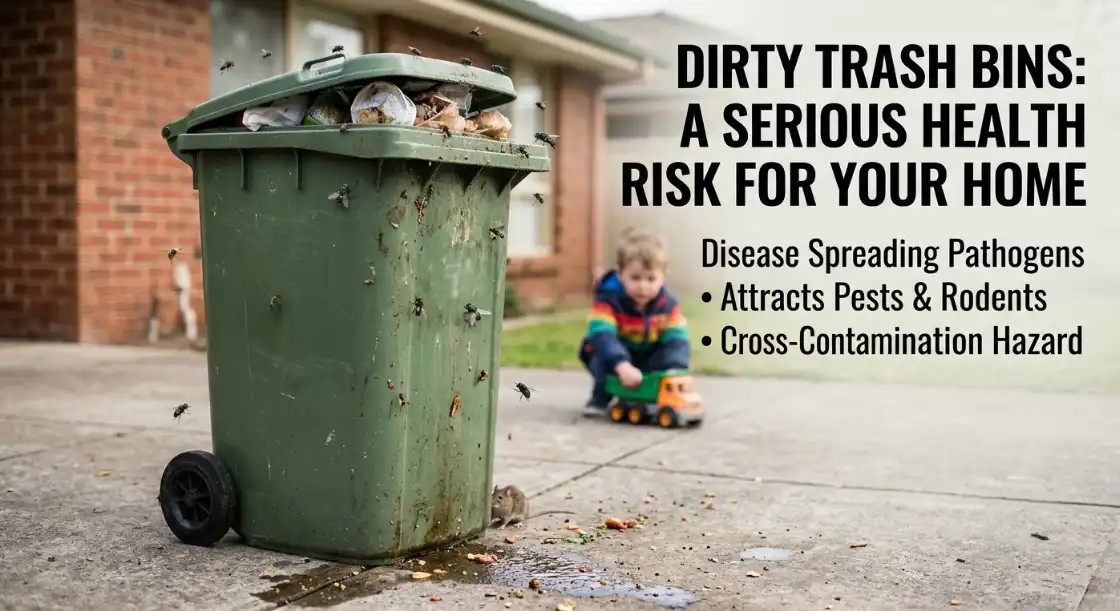
It began with a smell.
It wasn’t the normal smell of trash on trash day; it was something thicker, almost sour, that hung around the back door. A homeowner didn’t pay attention to it for a few days, thinking it would go away after the next pickup. But when they finally opened it, they saw maggots crawling along the sides and a sticky substance on the bottom. What seemed like a minor annoyance had quietly turned into a health risk.
One of the most common ways that germs spread in a home is through dirty trash cans. They have a direct effect on the cleanliness, safety, and air quality of your home while they are outside.
What makes trash cans that are dirty so dangerous?
Growth of Bacteria and Germs
Bacteria that are bad for you can grow in trash cans. Bacteria can grow quickly in food waste, moisture, and heat.
Research shows that household trash cans can hold harmful bacteria like E. coli, Salmonella, and Listeria. These germs can cause food poisoning and other infections.
Even if you put your trash in bags, leaks and spills can leave behind invisible germs that build up over time.
Pest Problems
A dirty bin doesn’t just smell bad. It draws in bugs.
Organic waste attracts flies, mice, and cockroaches. Once they locate a steady food source, they can quickly get into your house. Flies, in particular, lay eggs in trash, which can lead to maggot infestations in less than a day.
Health experts warn that flies can carry and spread over 100 disease-causing germs. Proper waste hygiene is essential.
Problems with Air Quality and Smell
The bad smell coming from your trash can is more than just bad. It shows that things are breaking down and bacteria are working.
Waste emits gases such as ammonia and hydrogen sulfide as it breaks down. These can make the air worse, especially if the bins are near doors, garages, or windows.
People who are sensitive to these smells may get headaches, nausea, and respiratory irritation over time.
How Dirty Trash Bins Affect Your Home and the Risk of Cross-Contamination
One of the biggest dangers is how quickly contamination can spread.
You move bacteria when you touch a dirty bin lid and then open your door. Pests carry germs when they move from the bin to your kitchen. Even rainwater that washes through a dirty bin can spread germs all over your driveway.
This cycle that keeps happening makes you more likely to get sick without you even knowing it.
Effects on Kids and Pets
Kids often play outside or near driveways, and pets might sniff or knock over trash cans. This direct contact makes them more likely to come into contact with harmful bacteria and parasites.
Young children get infections more often. Their immune systems are still developing. They have not built up protection against many common germs.
Not taking care of hygiene for a long time
A dirty bin is not usually a one-time problem. It happens again and again.
Cleaning becomes harder as residue builds up and smells get stronger. Even after a simple wash, the bin itself can become permanently dirty over time.
Signs that your trash can is becoming a health risk:
If the smell doesn’t go away after the trash has been picked up, it’s a clear sign that bacteria are building up.
Sludge or residue that can be seen
If there is sticky or dark residue at the bottom of the bin, it means the waste was not cleaned well. It has started to break down.
Maggots or flies are present
This is one of the clearest signs of danger. It means that the bin is now a place where things can grow.
More pests are around.
If you see more flies, ants, or mice around your trash can, it means that it is drawing unwanted attention.
Why is just cleaning not enough?
A lot of people who own homes try to clean their trash cans with soap and water. This may get rid of dirt on the surface, but it doesn’t always get rid of bacteria and smell completely.
This is why:
- Cold water doesn’t kill bacteria very well.
- Household cleaners might not kill germs very well.
- Residue in corners and cracks stays there.
Professional cleaning uses high-temperature water and special systems that are made to kill germs completely.
The Hidden Benefits of Cleaning Your Bin Regularly: Better Hygiene
A clean bin helps reduce bacteria and germs around your home, lowering the risk of unpleasant odors and potential health issues.
A Fresher Outdoor Space
No more lingering smells or messy buildup near your entrance. Your outdoor area stays clean, welcoming, and easier to maintain.
Fewer Pest Problems
Regular cleaning removes the food residue and waste that attract insects and rodents, helping keep unwanted pests away.
Peace of Mind
You don’t have to think twice about what’s sitting in your bin. It’s clean, hygienic, and one less thing to worry about.
FAQs:
How ofter do you need to clean trash cans?
Most experts say you should clean your trash cans at least once a month. You may need to clean more often in warmer places because bacteria grow faster there.
Can trash cans that are dirty make you sick?
Yes. Dirty trash cans can hold harmful bacteria. They can also attract bugs that spread disease. This can raise your risk of getting sick
Is it enough to just rinse a trash can?
No. Rinsing gets rid of visible dirt, but it doesn’t get rid of bacteria or smells very well.
Why are there maggots in trash cans?
Maggots are the young of flies. Flies lay their eggs in trash, and they hatch quickly, especially when it’s warm.
How can you clean a trash bin in the safest way?
The best way to get rid of bacteria and smells is to use hot water and the right cleaning methods.
Conclusion
A cleaner bin means a cleaner home. Stop bacteria, odors, and pests before they start with ExpressBins. Schedule your service today and make a noticeable difference.